
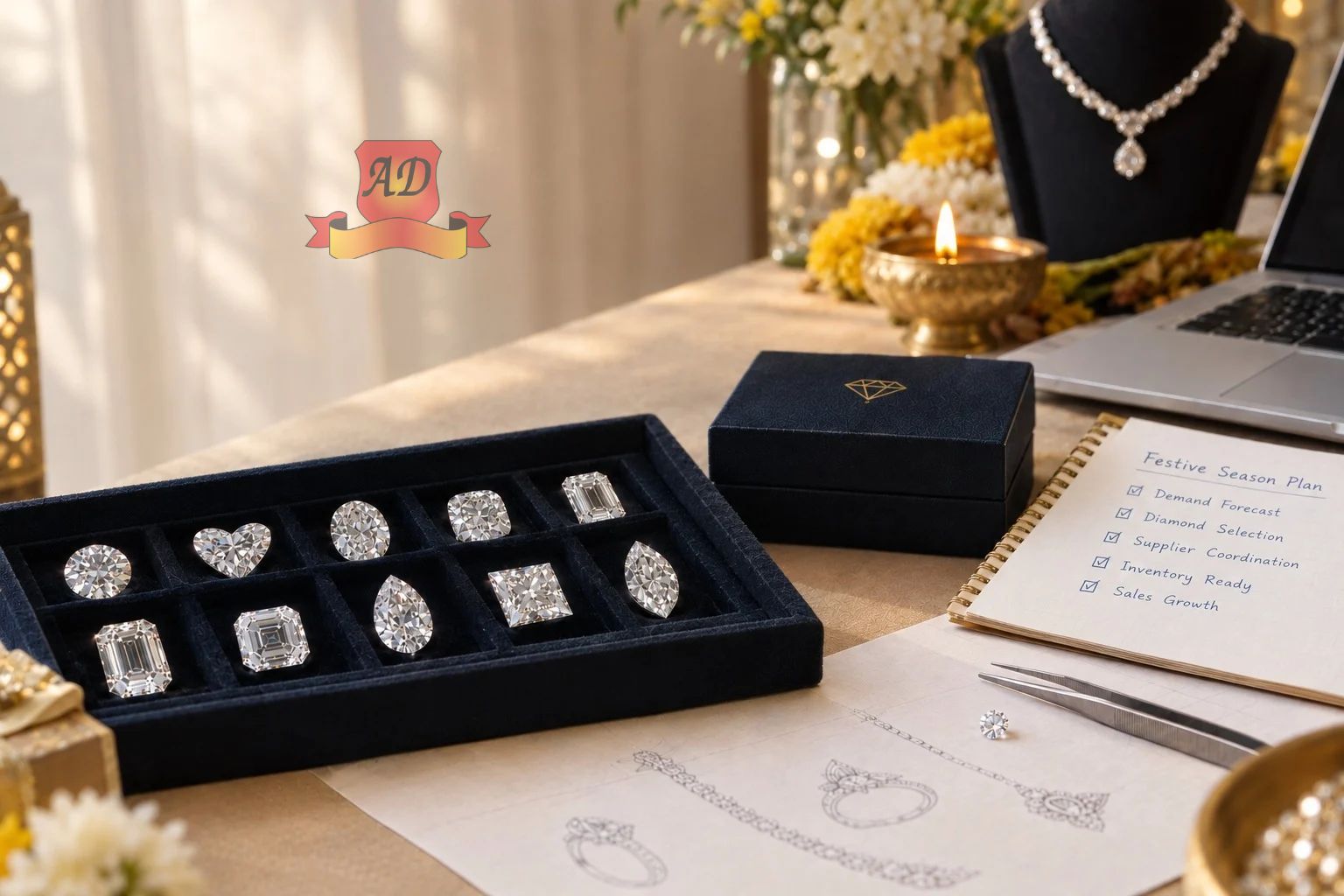
Learn how jewellery manufacturers can create diamond inventory for the festive season through smart planning, sourcing, and stock management strategies.
How Jewellery Manufacturers Can Create Diamond Inventory for the Festive Season
The festive season brings a major opportunity for jewellery manufacturers. Demand for diamond jewellery can increase as retailers prepare for weddings, celebrations, gifting, and seasonal collections. For manufacturers, this creates a need to maintain the right diamonds in stock without overcommitting capital to slow-moving inventory.
Building a strong diamond inventory is not simply about purchasing more stones. It requires manufacturers to understand demand, plan production, and evaluate diamonds based on factors such as shape, carat weight, colour, and clarity. The 4Cs of diamond quality can help manufacturers make more informed sourcing and inventory decisions.
A well-planned inventory strategy helps manufacturers respond to retailer requirements, maintain production schedules, and reduce the risk of stock shortages during peak demand.
Start with Previous Festive Season Data
Historical sales data provides a practical starting point for festive inventory planning. Manufacturers can review previous seasonal orders to understand which diamonds generated the most demand.
Key areas to analyse include:
- Popular diamond shapes
- Frequently ordered carat ranges
- Preferred colour and clarity combinations
- Fast-moving jewellery categories
- Retailer-specific requirements
- Average order volumes and lead times
This information helps manufacturers identify recurring demand patterns instead of relying only on assumptions.
Previous data can also highlight slow-moving categories. Manufacturers can use these insights to avoid building excessive stock in diamonds that may not generate sufficient festive demand.
Forecast Demand Before the Season Begins
Festive inventory planning should begin well before customer demand reaches its peak.
Manufacturers can create demand forecasts using historical sales, current market trends, retailer feedback, upcoming collection launches, and confirmed orders. These factors provide a clearer estimate of the diamonds required during the season.
Early forecasting also creates more time to source diamonds at suitable specifications. Manufacturers can build their diamond inventory gradually instead of making rushed purchases when demand suddenly increases.
A forecast should also account for production timelines. Diamonds needed for a new festive collection may have to be available weeks before the collection reaches retailers.
Identify the Diamonds That Move Fast
Not every diamond category requires the same inventory level.
Manufacturers should identify their core, fast-moving categories and give them priority when planning festive stock. Depending on their customer base and jewellery collections, these may include:
- Round brilliant diamonds
- Oval diamonds
- Cushion-cut diamonds
- Pear-shaped diamonds
- Popular commercial carat sizes
- Consistent colour and clarity combinations
The right mix depends on the manufacturer's market and product portfolio.
A manufacturer producing bridal jewellery may require a different inventory mix from one focused on everyday diamond jewellery. Understanding this difference helps create more relevant stock rather than simply increasing overall inventory.
Build Inventory Around Jewellery Production
Diamond inventory should support actual jewellery production requirements.
Manufacturers can divide their festive stock into three practical categories.
Core inventory: Diamonds that consistently support high-volume production and regular retailer orders.
Flexible inventory: Diamonds used across multiple designs or collections where demand may vary.
On-demand inventory: Special sizes, unusual shapes, or higher-value diamonds that manufacturers can source when a specific order is confirmed.
This approach creates a balance between availability and inventory control. Manufacturers can keep frequently required diamonds ready while using flexible sourcing for less predictable requirements.
Maintain the Right Mix of Shapes, Sizes, and Grades
A strong diamond inventory needs variety without becoming excessive.
Manufacturers should consider four key dimensions:
Diamond Shapes
Round diamonds remain important for many jewellery categories, while fancy shapes can support contemporary designs and differentiated collections.
Carat Sizes
Maintaining multiple size ranges allows manufacturers to support different jewellery designs and price segments.
Colour and Clarity
Different retailers and markets require different quality combinations. A balanced selection improves manufacturing flexibility.
Price Segments
Festive collections often target multiple customer groups. Inventory across commercial and premium segments can help manufacturers serve different retailer requirements.
The goal is not to stock every possible specification. It is to maintain the combinations that align with actual production and customer demand.
Strengthen Natural Diamond Sourcing
Reliable sourcing becomes particularly important when festive demand increases.
Manufacturers should work with diamond suppliers that can provide consistent quality, dependable documentation, and access to suitable inventory. Strong supplier relationships can also improve communication around availability, lead times, and additional sourcing requirements.
For manufacturers working with natural diamonds, certified stones provide greater transparency throughout the supply chain. Reliable grading documentation also helps manufacturers communicate specifications clearly with retailers and jewellery buyers.
An established sourcing partner can therefore become an important part of festive inventory planning rather than simply serving as a source for individual purchases.
Plan Inventory Around Retailer Commitments
Confirmed retailer orders should have a direct influence on inventory decisions.
Manufacturers can map upcoming orders against available diamond stock to identify potential shortages before production begins. This helps them secure required stones early and avoid production delays.
For planned festive collections, manufacturers can also reserve inventory for high-priority designs or confirmed retailer requirements.
This approach prevents valuable stock from being consumed by one order when it is already required for another production commitment.
Track Inventory Movement During the Festive Season
Inventory planning does not end after diamonds arrive.
Manufacturers should monitor stock movement throughout the festive period to understand what is selling faster than expected. Regular monitoring can reveal when certain shapes, sizes, or quality combinations need replenishment.
Useful metrics include:
- Sales velocity
- Stock turnover
- Inventory ageing
- Reorder requirements
- Available stock by category
- Pending customer requirements
Fast-moving diamonds may require additional sourcing, while ageing inventory may need a different sales or production strategy.
Regular monitoring allows manufacturers to adjust their diamond inventory before shortages or excess stock become major problems.
Keep Purchasing Flexible
Festive demand can change quickly. A retailer may introduce a new collection, a particular diamond shape may gain popularity, or an unexpected order may require specifications that are not currently available.
Manufacturers can manage this uncertainty by combining stocked inventory with flexible sourcing.
Instead of allocating the entire purchasing budget to fixed inventory, businesses can keep part of their sourcing strategy adaptable. This provides access to additional diamonds when demand changes without requiring manufacturers to carry excessive stock.
Flexibility becomes especially valuable for uncommon shapes, larger stones, and premium specifications.
Work With a Reliable Diamond Partner
Building festive inventory becomes easier when manufacturers have access to a dependable natural diamond sourcing partner.
Anita Diamonds supplies certified natural diamonds for jewellery manufacturers, wholesalers, and retailers, with options across different shapes, sizes, and quality specifications. Its sourcing capabilities can help manufacturers access suitable diamonds for festive collections and changing production requirements.
Working with a reliable supplier gives manufacturers greater visibility into available inventory while supporting faster responses to customer requirements.
Build the Inventory Before Demand Peaks
A successful festive season starts with preparation. Jewellery manufacturers should use historical data, forecast upcoming demand, identify fast-moving diamonds, and align inventory with actual production requirements.
The objective is not to hold the largest possible diamond inventory. It is to build the right inventory mix at the right time.
Manufacturers that combine planned stock with flexible sourcing can respond more effectively to festive demand while maintaining better control over inventory costs and production schedules.
With certified natural diamonds and dependable sourcing support from Anita Diamonds, jewellery manufacturers can prepare their festive collections with greater confidence and stay ready for changing market requirements.