Learn how diamond color grading ensures consistent quality, reduces sourcing risks, and helps jewellery brands build trust and confidence.
How Diamond Color Grading Safeguards Quality and Strengthens Brand Confidence
Consistency is one of the biggest challenges in jewellery manufacturing. Customers expect every diamond jewellery piece to meet the same standard of quality, appearance, and value. Whether a manufacturer produces a single bespoke design or an entire collection, maintaining uniformity remains essential.
Diamonds naturally vary in colour. Even slight differences can affect the overall look of a jewellery piece. This is why Diamond Color Grading plays an important role in the manufacturing process. It provides a recognised method for assessing and categorising diamond colour. As a result, manufacturers can source, sort, and match diamonds more accurately.
For jewellery manufacturers, colour grading is not simply a technical requirement. It supports quality control, improves inventory management, and helps create jewellery that looks consistent across every collection. When used correctly, Diamond Color Grading becomes a valuable tool for maintaining high manufacturing standards while meeting customer expectations.
The Role of Diamond Color Grading in Manufacturing
Diamonds are available in a wide range of colour grades. Most white diamonds contain subtle traces of colour that are not always visible to the untrained eye. However, these differences become noticeable when multiple diamonds are placed together in the same jewellery design.
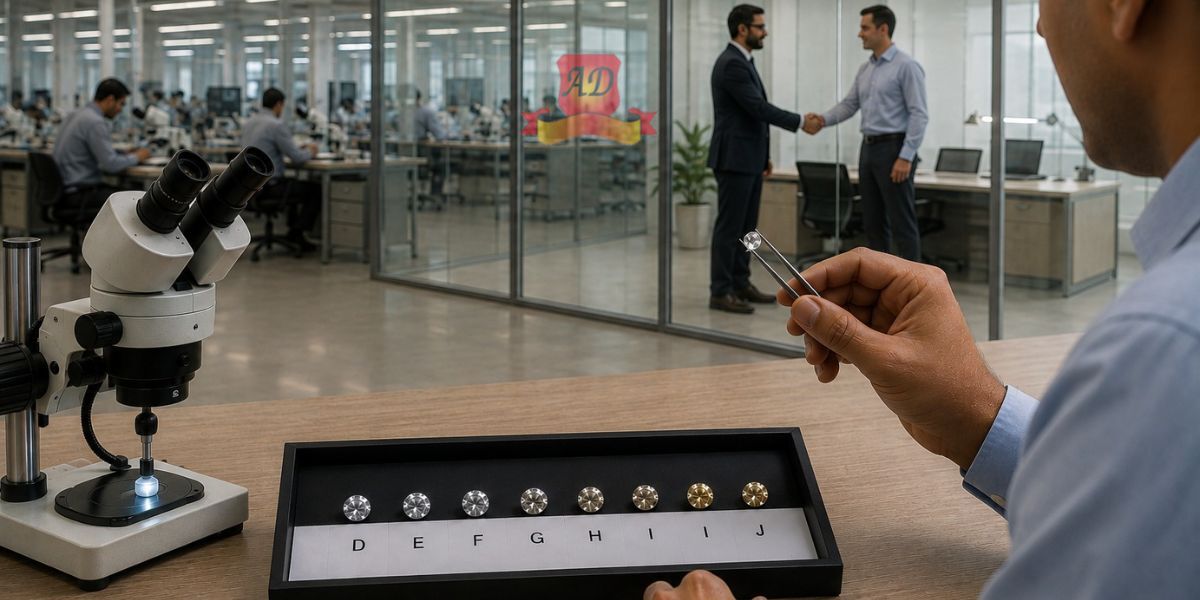
Diamond Color Grading provides a standardised system that measures the amount of colour present in a diamond. The grading scale generally ranges from D to Z. Diamonds closer to D are considered colourless, while those further down the scale display more visible colour.
This standardisation helps manufacturers communicate clearly with suppliers, wholesalers, and retailers. It also creates consistency throughout the supply chain. When everyone follows the same grading standards, purchasing decisions become more accurate and production processes become more efficient.
Why Colour Consistency Matters
Colour consistency directly affects the visual appeal of diamond jewellery. A necklace, bracelet, or pair of earrings often contains multiple stones. If those diamonds vary significantly in colour, the finished piece may appear uneven.
Manufacturers use Diamond Color Grading to ensure that diamonds selected for a design fall within the desired colour range. This allows stones to complement one another and create a balanced appearance.
Consistency becomes even more important when producing jewellery collections. Customers expect similar products within a collection to have the same look and quality. Standardised grading helps manufacturers achieve this goal while reducing variations between pieces.
A consistent approach also helps brands maintain a stronger reputation for quality over time.
Strengthening Quality Control Processes
Quality control begins long before a diamond reaches the production floor. Manufacturers must verify that incoming inventory meets their required standards.
This is where Diamond Color Grading becomes particularly valuable. It provides an objective way to assess diamond colour and confirm that supplied stones match purchase specifications.
Accurate grading helps manufacturers:
- Verify diamond quality
- Match diamonds more effectively
- Reduce production errors
- Improve consistency across collections
- Minimise customer concerns
Reliable documentation also supports quality assurance efforts. In fact, diamond grading reports play an important role in quality assurance, helping manufacturers validate the characteristics of the diamonds they source and use in production.
When grading information is available from trusted sources, manufacturers gain greater confidence in the quality and consistency of their inventory.
Supporting Better Inventory Management
Managing a diamond inventory involves more than tracking quantities. Manufacturers must organise diamonds according to several characteristics, including size, cut, clarity, and colour.
Without standard grading practices, sorting inventory can become time-consuming and inefficient.
Diamond Color Grading allows manufacturers to classify diamonds accurately and maintain organised stock records. This improves visibility across inventory and makes diamond selection faster during production planning.
A structured inventory system offers several benefits:
- Faster sourcing for production requirements
- Better stock control
- Improved planning accuracy
- Reduced procurement mistakes
- Greater operational efficiency
When manufacturers can quickly identify diamonds within a specific colour range, production schedules become easier to manage and quality standards remain consistent.
Improving Jewellery Design Outcomes
Colour is an important design consideration. It influences how a diamond interacts with light and how it appears within different jewellery settings.
Manufacturers often evaluate colour grades alongside metal choice, diamond shape, and overall design objectives. Selecting the right combination helps create a more refined finished product.
For example, white metals such as platinum and white gold can make colour differences more noticeable. Yellow gold may complement diamonds with slightly warmer colour grades. As a result, the right diamond setting enhances colour appearance and contributes to the overall visual balance of a jewellery piece.
Colour grading allows manufacturers to make informed design decisions from the beginning of the production process rather than making adjustments later.
The Relationship Between Colour and Diamond Value
Diamond colour is one of the primary factors that influence value. Even small differences in colour grade can affect pricing.
For manufacturers, this makes accurate grading essential. Purchasing diamonds without a clear understanding of colour can lead to pricing inconsistencies and budgeting challenges.
Because colour grading has a direct impact on diamond pricing, manufacturers use grading information to estimate production costs more accurately and establish realistic pricing structures.
Consistent grading also improves communication with suppliers and customers. Everyone involved in the transaction works from the same set of standards, reducing confusion and improving transparency.
This level of accuracy helps manufacturers maintain greater control over inventory value and production expenses.
How Diamond Shape Influences Colour Appearance
Colour grading remains consistent across the industry, but the appearance of colour can vary depending on a diamond's shape.
Certain cuts reveal colour more easily than others. This is why manufacturers consider shape and colour together when sourcing diamonds for specific jewellery designs.
For example, diamond shape can affect how colour appears, especially in elongated or step-cut diamonds where colour may be easier to detect.
Similarly, cushion cut diamonds can show colour differently from other shapes, making colour selection particularly important when creating jewellery collections that feature this popular cut.
Understanding how shape influences visual appearance helps manufacturers achieve better consistency across different product categories.
Colour Grading and Diamond Sourcing Decisions
Sourcing decisions have a direct impact on manufacturing quality. Manufacturers rely on accurate grading information to ensure that purchased diamonds meet production requirements.
This becomes particularly important when comparing different types of diamonds. After all, natural and lab-grown diamonds differ in several important ways, and grading standards help manufacturers evaluate diamonds more effectively regardless of their origin.
Consistent sourcing practices supported by grading standards reduce uncertainty and improve long-term production planning. Manufacturers can build stronger supplier relationships and establish clear expectations regarding quality requirements.
As a result, sourcing becomes more predictable and efficient.
Keeping Pace with Market Expectations
Today's jewellery market places greater emphasis on transparency and quality assurance. Consumers increasingly want confidence in the diamonds they purchase.
Manufacturers must respond by maintaining consistent standards throughout the production process. Diamond Color Grading supports this objective by providing measurable and verifiable quality information.
Market trends also influence consumer preferences over time. In fact, natural diamond demand continues to evolve across global markets, encouraging manufacturers to remain focused on quality, consistency, and responsible sourcing practices.
Businesses that prioritise standardisation are often better positioned to adapt to changing market conditions while maintaining customer trust.
Why Manufacturers Rely on Diamond Color Grading
Maintaining consistency is essential in modern jewellery manufacturing. Customers expect diamonds within a collection to match in appearance, quality, and value. Achieving this level of uniformity requires reliable standards throughout the sourcing and production process.
Diamond Color Grading provides those standards. It helps manufacturers assess diamond colour accurately, organise inventory more effectively, strengthen quality control procedures, and create jewellery with a consistent appearance.
From sourcing decisions to final production, Diamond Color Grading supports every stage of manufacturing. It reduces uncertainty, improves operational efficiency, and helps ensure that every finished jewellery piece meets the intended quality standard.
As the jewellery industry continues to evolve, colour grading remains one of the most effective tools for maintaining consistency and delivering quality that customers can trust.
Maintain Consistency with Trusted Diamond Expertise
For jewellery manufacturers, consistent quality begins with reliable sourcing and accurate grading standards. With more than 40 years of diamond manufacturing expertise, Anita Diamonds supports jewellery businesses with carefully selected natural diamonds that help maintain quality, consistency, and confidence across every collection.