
Learn smart inventory planning strategies to improve cash flow in diamond trading. Discover how natural diamond businesses can reduce dead stock, improve turnover, and strengthen long-term profitability with efficient inventory management.
Improve Cash Flow in Diamond Trading with Smart Inventory Planning Strategies
Cash flow management remains one of the biggest priorities for businesses operating in the natural diamond industry. Diamond manufacturers, wholesalers, and jewellers constantly manage high-value inventory, fluctuating demand, and extended trading cycles. Every inventory decision directly affects liquidity, operational flexibility, and long-term profitability.
In the natural diamond sector, inventory is more than stored stock. It represents significant working capital. When inventory remains unsold for extended periods, businesses often experience financial pressure that limits purchasing power and slows future growth opportunities.
Strong inventory planning helps businesses maintain healthier liquidity while responding efficiently to changing customer demand. Businesses that improve inventory movement usually strengthen Cash Flow in Diamond Trading while building more sustainable operations.
Understand the Financial Impact of Excess Inventory
Many businesses assume that larger inventory levels create stronger market positioning. However, excess inventory often places unnecessary pressure on liquidity. Unsold diamonds continue to tie up capital while operational expenses increase over time.
Holding inventory for longer periods can increase:
- Insurance costs
- Storage expenses
- Financing charges
- Operational overheads
- Inventory maintenance costs
Slow-moving stock reduces purchasing flexibility and creates additional financial exposure. Businesses that regularly evaluate inventory performance often improve Cash Flow in Diamond Trading by reducing unnecessary capital blockage. Businesses also benefit from understanding common purchasing mistakes that affect profitability in natural diamond sourcing and inventory decisions.
Prioritise Faster Inventory Turnover
Inventory turnover plays a major role in financial efficiency within the natural diamond industry. Faster stock movement helps businesses recover invested capital more quickly and improve liquidity.
Slow inventory turnover often creates:
- Reduced working capital availability
- Higher holding costs
- Limited operational flexibility
- Increased dead stock risk
- Lower inventory productivity
Natural diamond manufacturers usually achieve stronger financial stability when they focus on inventory rotation instead of stock accumulation.
Practical inventory turnover strategies include:
- Monitoring ageing inventory regularly
- Prioritising high-demand categories
- Reducing duplicate stock purchases
- Reviewing customer buying behaviour
- Aligning manufacturing with demand trends
Efficient stock rotation supports healthier Cash Flow in Diamond Trading while improving overall business efficiency. Businesses following current diamond market movement and changing buying patterns often maintain stronger inventory turnover.
Build a Demand-Driven Inventory Strategy
The natural diamond market continues to evolve with changing consumer preferences, bridal jewellery trends, and global buying patterns. Businesses that rely on assumptions instead of market data often struggle with inventory imbalance.
Demand-driven inventory planning allows businesses to manufacture and purchase more strategically. This approach reduces unnecessary stock accumulation while improving financial discipline.
Forecasting helps businesses align inventory levels with realistic market demand. Better forecasting also improves Cash Flow in Diamond Trading because businesses avoid overcommitting capital to slow-moving goods.
Important forecasting indicators include:
- Historical sales performance
- Seasonal buying patterns
- Retail demand movement
- Export market activity
- Consumer trend shifts
- Market purchasing behaviour
Businesses that forecast accurately often respond faster to market changes while maintaining stronger inventory efficiency. Monitoring evolving jewellery design preferences also helps businesses forecast inventory demand more effectively.
Maintain a Balanced Inventory Structure
Balanced inventory management helps businesses serve multiple customer segments without increasing financial risk. Overstocking a single category often limits flexibility and increases liquidity pressure.
Natural diamond manufacturers frequently improve inventory performance when they maintain a diversified inventory mix across:
- Certified natural diamonds
- Commercial goods
- Popular diamond shapes
- Various clarity grades
- Multiple carat sizes
- Specialised inventory categories
A balanced inventory structure improves stock circulation across different market segments. This directly supports stronger Cash Flow in Diamond Trading by encouraging more consistent inventory movement.
Regular inventory reviews also help businesses reposition stock according to current demand trends. Businesses sourcing premium-quality natural diamonds with proper planning often maintain healthier inventory balance and stronger customer demand alignment.
Improve Coordination Between Manufacturing and Supply
Efficient coordination between manufacturing and supply chain operations plays a major role in inventory control. Poor communication often results in overproduction, excess inventory buildup, and unnecessary financial pressure.
Natural diamond manufacturers commonly manage multiple production cycles simultaneously. Without accurate planning, businesses may produce inventory that exceeds actual market demand.
Strong coordination supports:
- Better production scheduling
- Faster order fulfilment
- Reduced inventory pressure
- Improved stock flexibility
- Lower operational inefficiencies
Businesses that streamline manufacturing decisions often improve Cash Flow in Diamond Trading because capital remains more accessible for future business opportunities.
Reliable supplier relationships also support more adaptable inventory planning strategies.Specialised handling and sourcing solutions for rare diamonds also help businesses improve inventory accuracy and operational efficiency.
Use Inventory Data to Support Better Decisions
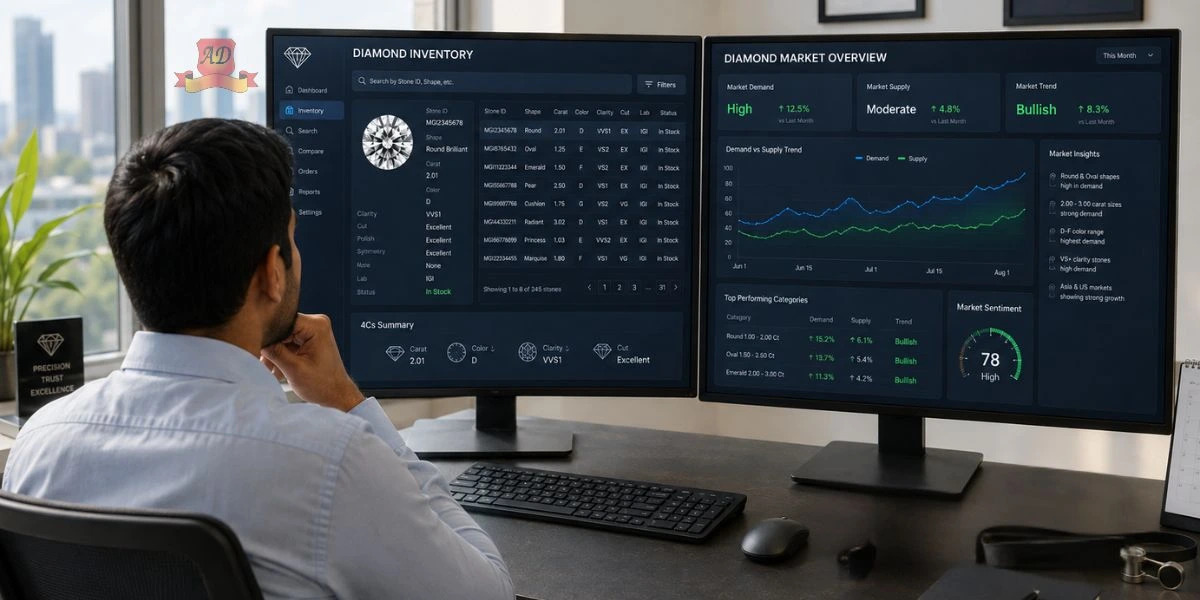
Inventory planning becomes more effective when businesses rely on data instead of assumptions. Regular inventory analysis helps identify financial risks, stock gaps, and underperforming categories before they create long-term problems.
Inventory data offers valuable insights into:
- Fast-moving goods
- Dead stock exposure
- Margin performance
- Demand fluctuations
- Customer buying behaviour
- Product category performance
Data-driven inventory management reduces emotional purchasing decisions while improving operational discipline.
Businesses that use inventory analytics consistently often strengthen Cash Flow in Diamond Trading and improve long-term inventory efficiency. Advanced diamond verification technologies are also helping manufacturers improve inventory transparency and product tracking accuracy.
Reduce Dead Stock Before It Impacts Liquidity
Dead stock remains one of the biggest challenges within the natural diamond industry. Unsold inventory locks working capital and reduces purchasing flexibility.
Natural diamond manufacturers usually improve financial stability when they identify slow-moving goods early and take corrective action quickly.
Effective approaches include:
- Conducting regular inventory audits
- Reviewing ageing stock frequently
- Adjusting manufacturing priorities
- Reallocating inventory strategically
- Aligning stock with current demand trends
Reducing stagnant inventory supports healthier liquidity and improves long-term operational stability.
Align Inventory with Current Market Trends
Customer demand within the natural diamond market changes continuously. Certain diamond categories gain popularity while others experience slower movement. Businesses that monitor these shifts often maintain stronger inventory performance.
Trend-based inventory planning helps businesses improve Cash Flow in Diamond Trading because inventory stays aligned with active customer demand.
Important market indicators include:
- Popular diamond shapes
- Certified diamond demand
- Bridal jewellery trends
- Regional buying preferences
- Luxury purchasing behaviour
- Retail sales movement
Businesses that adapt inventory strategies according to market conditions often maintain stronger inventory turnover and better operational flexibility. Industry exhibitions and global diamond trade events also provide valuable insights into changing market demand and inventory movement trends, including events like JCK Las Vegas
Strengthen Financial Discipline Across Inventory Planning
Financial discipline remains essential for sustainable inventory management. Businesses that carefully control purchasing and manufacturing decisions often reduce unnecessary financial exposure.
Strong financial discipline includes:
- Structured purchasing processes
- Defined inventory budgets
- Controlled production planning
- Regular inventory reviews
- Strategic stock allocation
Businesses that maintain financial discipline usually improve Cash Flow in Diamond Trading while building stronger long-term business stability.
Consistent planning also allows businesses to navigate changing market conditions with greater confidence. Industry organisations like GIA also provide valuable market education and diamond grading standards that support informed inventory decisions.
Creating Sustainable Growth Through Smarter Inventory Management
Smart inventory planning remains one of the most important foundations for long-term success in the natural diamond industry. Businesses that manage inventory strategically often improve liquidity, reduce financial pressure, and maintain healthier operational stability.
Strong Cash Flow in Diamond Trading depends not only on sales performance but also on how effectively businesses manage inventory movement, forecasting, and working capital together.
Natural diamond manufacturers that focus on inventory efficiency, demand-driven planning, and balanced stock management usually create stronger business resilience over time.
Businesses looking to improve inventory efficiency and strengthen Cash Flow in Diamond Trading can benefit from partnering with experienced natural diamond manufacturers. Anita Diamonds brings 15 years of expertise in natural diamond manufacturing, helping global businesses navigate inventory planning with greater confidence, consistency, and long-term operational strength.