
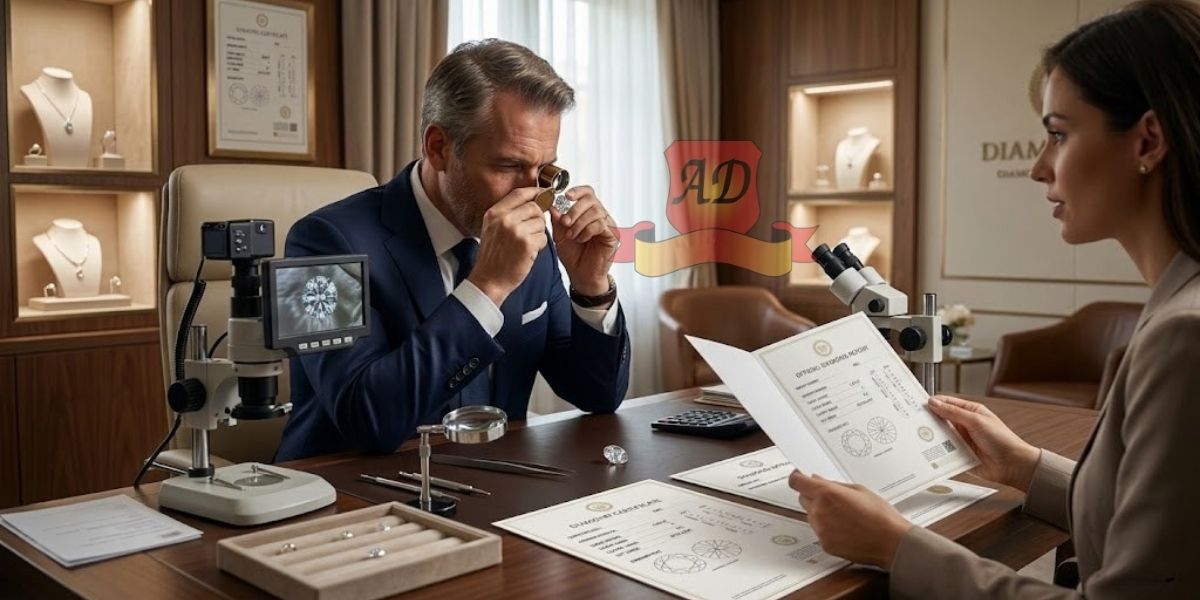
Diamond appraisal and certification explained for the diamond trade. Learn how both processes verify value, authenticity, and transparency in global markets.
Diamonds move through many stages before they reach the final buyer. Each stage demands accuracy, trust, and documented value. For professionals in the diamond trade, understanding the difference between diamond appraisal and certification is essential.
Many people assume both terms mean the same thing. In reality, they serve very different purposes. Both processes support transparency in the global diamond supply chain, but they address separate aspects of a diamond’s value and authenticity.
Understanding Diamond Appraisal and Certification
Before comparing them, let’s understand what each process involves.
A diamond certification confirms the gemological characteristics of a stone. Independent gemological laboratories evaluate the diamond using the 4Cs – cut, colour, clarity, and carat weight. The laboratory then issues an official grading report.
A diamond appraisal determines the monetary value of the diamond. It considers current market conditions, diamond quality, and jewellery setting values, if applicable.
In simple terms, diamond appraisal and certification serve different roles. Certification focuses on scientific grading, while appraisal focuses on financial valuation.
Purpose of the Evaluation
The first difference lies in the purpose.
Diamond certification aims to provide an objective analysis of the stone. Laboratories assess the diamond using gemological standards and specialised instruments. The report confirms the stone’s identity and characteristics.
A diamond appraisal, on the other hand, determines the estimated market value. Appraisers consider the stone’s grading, demand in the diamond wholesale market, and broader industry trends.
For diamond dealers and B2B buyers, both documents support transparent trade. However, they serve different commercial functions.
Who Performs the Evaluation
Another key difference relates to who conducts the evaluation.
A diamond certification comes from independent gemological laboratories. These laboratories specialise in diamond grading reports and maintain strict testing standards.
A diamond appraisal usually comes from a qualified jewellery appraiser or experienced diamond professional. Appraisers evaluate the diamond and estimate its value based on current diamond pricing benchmarks.
Because of this difference, diamond appraisal and certification should never replace one another. Instead, they complement each other within the professional diamond trade.
Nature of the Report
The structure of the report also differs significantly.
A diamond certification report contains technical details about the diamond. This includes measurements, grading results, proportions, and sometimes laser inscription information. The document focuses purely on gemological data.
A diamond appraisal report includes the estimated replacement or resale value of the diamond. It may also include descriptions of the stone, its mounting, jewellery craftsmanship, and its overall condition
Role in Diamond Pricing
Pricing plays a major role in the diamond trade.
A certified diamond provides buyers confidence in the stone’s quality. Certification helps maintain consistency in the international diamond market because grading follows standard guidelines.
An appraisal, however, translates those grading results into a monetary figure. The value reflects market demand, rarity, and overall stone quality.
For diamond dealers and jewellery manufacturers, the combination of appraisal and certification helps support fair pricing during wholesale diamond transactions.
Usage in Trade and Retail
A diamond certification often travels with the stone through multiple stages of the diamond distribution network. Wholesalers, traders, and retailers rely on the certification to verify quality.
An appraisal is more commonly used for insurance, resale evaluation, or financial documentation.
In B2B trading environments, certification holds stronger relevance for quality verification. Meanwhile, appraisals provide financial clarity when required.
Stability of the Document
A diamond certification report rarely changes because the physical characteristics of the diamond remain constant. Unless the stone is damaged, the grading stays the same.
A diamond appraisal, however, can change. The value may rise or fall based on diamond market trends, supply conditions, and global demand.
This means diamond appraisal and certification operate on different timelines. Certification remains stable, while appraisal reflects current market realities.
Importance in Professional Diamond Sourcing
For diamond dealers, jewellery manufacturers, and wholesalers, sourcing reliability is essential.
A certified diamond supports trust within the international diamond trade network. Buyers can verify the stone’s specifications before committing to a transaction.
An appraisal provides an additional layer of understanding about the commercial value of the stone.
Together, diamond appraisal and certification create a more transparent environment for bulk diamond purchasing, dealer partnerships, and international trade operations.
Why Understanding Both Matters
In today’s competitive diamond market, knowledge strengthens decision-making.
When professionals understand the difference between diamond appraisal and certification, they reduce risks during sourcing, trading, and valuation. Certification confirms the gemological integrity of the stone. Appraisal interprets its financial worth in the current market.
For B2B buyers, this knowledge supports responsible diamond procurement, consistent grading standards, and reliable supply chain practices.
Both processes play essential roles in the diamond industry. While they often appear similar, diamond appraisal and certification address different aspects of the same asset.
Certification verifies quality and authenticity, while appraisal determines monetary value based on market conditions.
Professionals in the diamond trade recognise this distinction, which improves transparency, strengthens trust, and supports informed purchasing decisions.
Businesses that value clear documentation, accurate grading, and responsible sourcing continue to rely on both processes as part of their standard practice.
If you are a diamond dealer, wholesaler, or jewellery manufacturer looking for a trusted supply partner, working with an experienced diamond brand matters.
Anita Diamonds supports the global diamond trade with carefully sourced stones and reliable industry knowledge.
Connect with the team to explore high-quality diamonds and strengthen your sourcing network with confidence.